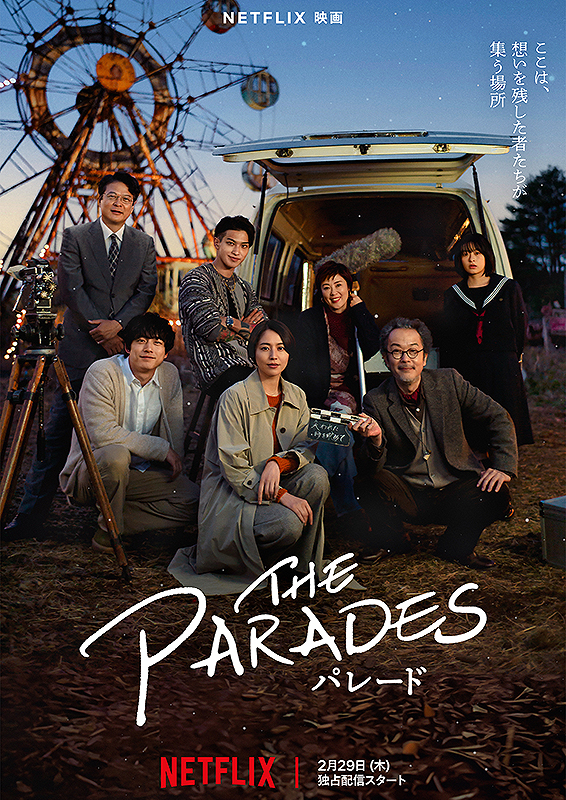
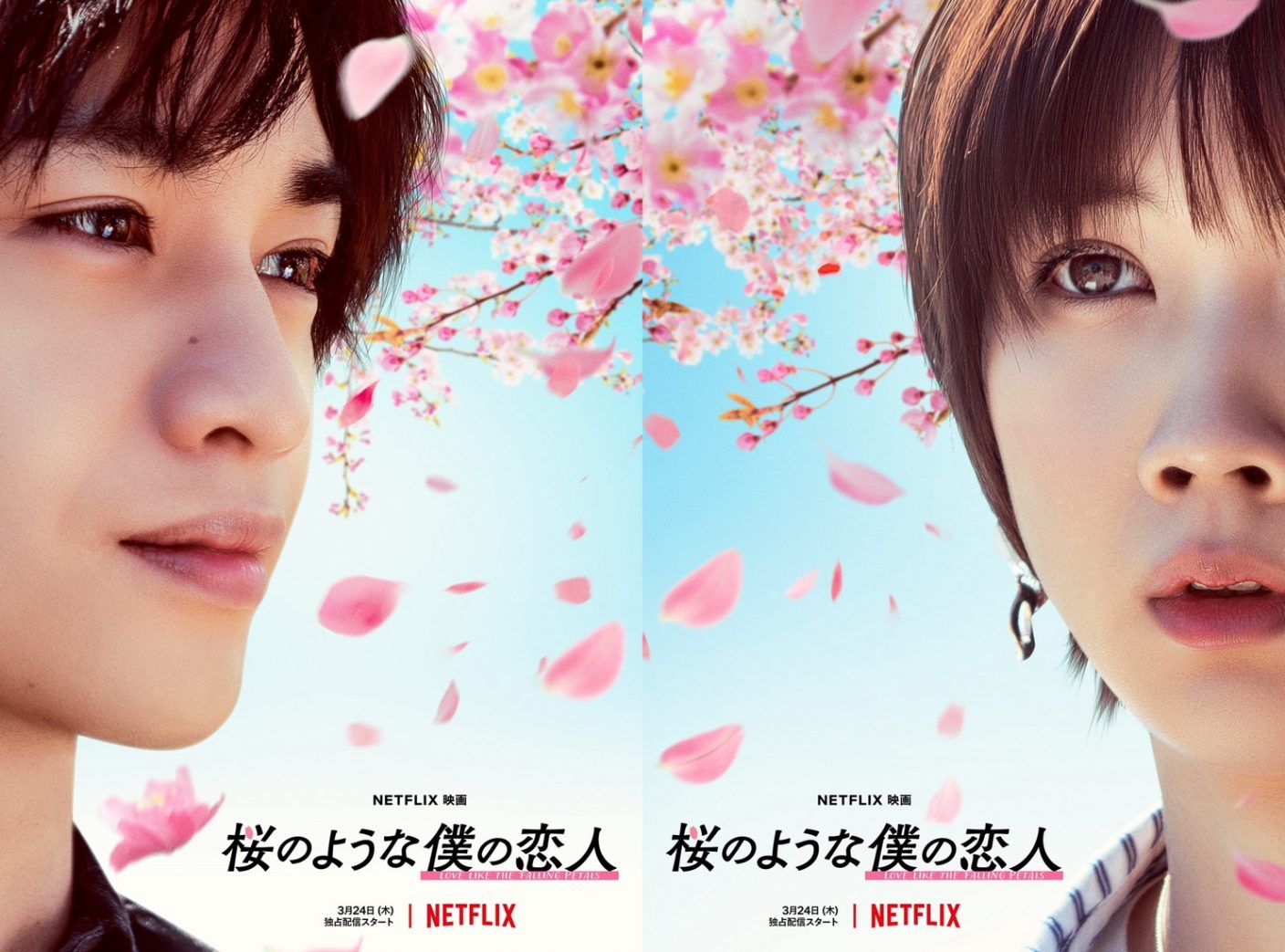
A long time ago, it used to be the main private TV networks i.e. FujiTV, TBS, NTV, TV Asahi and TV Tokyo dominating the supply of Japanese dramas with their seasonal offerings which typically lasted for three months and episodes were shown weekly. There was no such thing as on-demand viewing which allowed people to watch dramas at their own time and preferred pace including the option of watching all episodes at one go. If you wanted to watch a drama, you had to be home by a specific time to catch it live or set your video recorder to do the recording for viewing later.
Then, NHK and the cable networks like WOWOW came into the game with their comparatively shorter and sometimes edgier dramas which had more room to take on controversial themes or those which challenged the boundaries of censorship restrictions. Dramas were no longer restricted to the typical 3-month cycle and could start and end at anytime within the year. Gradually, the private networks also adopted similar practices and the length of dramas across the industry became more varied. From a typical 11 to 13 episodes in the past, most dramas these days tend to range from 8 to 10 for the private networks and as short as 3 to 5 episodes for dramas from NHK and WOWOW.
And then came the international streaming platforms like Netflix, Disney+ and Amazon Prime.
Rather than just buy content from the Japanese dramas producers to show on their platforms, they started making their own dramas which definitely became a game changer in the industry. Fueled by the COVID-19 pandemic when people had to stay home for prolonged periods of time, this cultivated the habit of watching dramas at one go at your own convenience. And that's when such platforms were favoured for this competitive advantage they had over the domestic providers where you had to wait three months to finish one drama. In addition, the dramas produced by these streaming platforms started to gain traction for their production quality and the cast lineups they could assemble with their big budgets compared to the TV stations which relied highly on advertisement revenue that was on the downward trend.
Although the domestic TV stations do have their individual on-demand platforms, you have to pay a subscription fee but are restricted to watching that TV station's works only. As such, it is no wonder that international streaming platforms are definitely seen as a better deal since subscribers are able to watch works from different sources at one price on a single interface. And that's not including the non-Japanese works that are on offer.
As to how these Japanese dramas produced by international streaming platforms have changed the competitive landscape for the Japanese TV dramas industry, Daily Shincho's
recent article on Netflix's rise in the industry offers some interesting insights into this trend and how it affects various market players and participants. Here are the key highlights from this article:
* From the perspective of domestic TV stations, Netflix is sometimes seen as "robbing or hogging" the supply of actors thus limiting their choices for casting due to the streaming platform's deep pocket for production budgets and actor fees. On the other hand, advertisement revenue for TV stations hasn't been increasing for at least the past 5 years so it's no wonder that the TV stations are finding it very difficult to match up to Netflix in splashing on production budgets.
From an average budget of JPY 30m per episode in domestic TV stations, there were reports saying that some works aired since the beginning of this year actually had their already tight budgets reduced to just JPY 25m per episode. For producers, they not only have to come up with high quality works but have to work within the constraints of a smaller budget. Scriptwriters also cannot afford to spend a lot of time on refining their scripts as much as they like because this will cause the budget to balloon.
This trend of saving costs can be easily observed in two ways - the number of scene changes in the drama and the use of non-professional actors such as tarento and comedians. With fewer scene changes, this allows for the running time for each scene to be lengthened and less money needed for changes to the studio set or location shooting. For non-professional actors, they tend to charge lower fees compared to the actors so this also helps to keep the budget in check.
* Netflix first started operations in Japan in 2015 and their first production was "Underwear" starring Kiritani Mirei in the same year. Since then, they have been producing Japanese dramas and movies at the pace of around 2 to 8 titles per year.
* Production budgets for domestic TV dramas shown in primetime slots (7pm to 11pm) hover around the average of JPY 30m per episode. Netflix is said to spend about 5 times more than this amount i.e. more than JPY 100m per episode. Actors' fees are said to be around JPY 1m to JPY 3m per episode for domestic TV stations' dramas (leading actors level) but for the same 1-hr episode on Netflix, they are supposedly paid at least more than JPY 10m per episode.
As such, from the perspective of the management agencies, Netflix's presence in the market is very much welcomed for increasing the amount of acting jobs for their artists and the income they get as a result. It has been observed that many actors (mostly those not at leading actor level) are juggling multiple projects at the same time and this has been attributed partly to the low remuneration they can get from participating in domestic TV stations' dramas. On the other hand, NHK depends on its subscription model thus is not so affected by changes in the economy and the advertisement revenue trends. Then again, they are said to pay about half of what the domestic TV stations are giving.
* Since Netflix can afford to pay a lot, it is no wonder that they are able to put together leading class actors in the same drama or movie with ease compared to the private TV stations.
Using the recently released drama "Jimenshitachi", the main actors are all in the leading class category i.e. Ayano Go, Toyokawa Etsushi, Koike Eiko, Sometani Shota, Lily Franky and Ikeda Elaiza. For the drama "Shinobi no ie House of Ninjas" released in February this year, the lineup was something that was deemed as unachievable going by the size of the private TV stations' budgets - imagine Kaku Kento, Eguchi Yosuke, Koura Kengo, Kimura Tae, Emoto Tokio, Yoshioka Riho, Yamada Takayuki and Miyamoto Nobuko in the same drama.
* One other interesting observation is that Netflix is seemingly fine with casting actors who would have been deemed as problematic, had gotten into trouble with the law, had gone independent to set up their own agencies or had issues with their management agencies. In the past, there was always talk of management agencies exerting pressure on TV stations not to use artists who left them or moved to another agency or that TV stations themselves had refrained from choosing certain artists even without the pressure from management agencies. As for those who got involved in scandals or had brushes with the law, it was almost a given that they would be "untouchable" for fear of societal sentiment as well as actual and perceived negative impact on reputation of the advertisers and TV stations and the performance of the production in terms of ratings and box office takings.
However, with streaming platforms being less affected by advertisement revenue or rather tied down by these implied and longstanding "restrictions" in the entertainment industry, artists who would have limited opportunities because of these reasons are finding platforms like Netflix to be a lifeline for them. As such, these artists no longer have to rely solely on domestic TV stations for acting jobs. Examples include:
- Karata Erika whose career took a serious beating due to her affair with Higashide Masahiro, still managed to get a role in the upcoming "Gokuaku Joou" which will be released on 19 September.
- Pierre Taki who was sentenced for cocaine use, appeared in "Jimenshitachi" as one of the key members in the fraud group.
* While Netflix definitely pays very well, it also means a longer filming period for the cast as they take at least twice the amount of time to shoot their dramas. Domestic TV stations typically take about 3 to 4 months to finish a single season's drama but Netflix can at least take more than 6 months to film a 10-episode drama. For example, the 2022 work "First Love Hatsukoi" starring Mitsushima Hikari and Sato Takeru which spanned 9 episodes, took about a year for the filming to be completed i.e. 4x the amount of time needed for a typical domestic TV station drama.
However, it seems that the longer time spent is translating into good results as good critical reviews reflect the elevation of production quality through the cast and crew having more time to perfect what they are doing. And it also helps that the cast and crew are paid very well in exchange for a longer commitment period so nobody's really complaining, for now.
* Netflix's Japan membership base is estimated to be about 8.1 million. In contrast, NHK's subscription numbers at the end of the 2023 fiscal year was 41.07 million. As such, Netflix does look like a serious contender which is only expected to grow bigger in time and possibly exert more influence on changing existing practices in the industry.
---------------------------------------------------------------------------------------------------------------------
As a viewer, I am always supportive of more avenues to watch Japanese dramas and movies easily in cost-effective ways. Having a single platform where I can watch the most titles of interest to me without paying exorbitant fees is a key deciding factor when selecting the streaming services. While Netflix is certainly not the cheapest among the offerings in the market now, it certainly has the most varied content because there's more to just the Japanese ones which I can watch. It has certainly not gone unnoticed that Netflix have been beefing up the amount of Japanese content in the past year or so and that's not restricted to their inhouse productions only. In particular, I really like that they have been adding more WOWOW titles which were practically inaccessible in the past to those outside of Japan.
In a bid to see how my viewing habits and trends have changed due to the streaming platforms raising the game in the Japanese dramas/movies arena, I did a quick analysis of my viewing history for 2023 and this year (up to 31 August) and noticed the following changes:
* With more Japanese dramas and movies being made available on Netflix, I watched about the same number of dramas and movies (15 dramas and 19 movies = 33) so far this year compared to last year when I watched only dramas (34) on TVer.
* Among the dramas I watched in 2023, 26 out of 34 were in-season ones on TVer. The good thing is, you can access this platform for free as long as you are based in Japan or have a Japanese VPN service. However, the biggest problem is, you have to watch new episodes within a week of its broadcast before they are taken down. If you happen to be busy and cannot spare the time to catch up in time, you might find yourself having to "drop dramas" because you are missing some episodes in between. And that's what happened to me a number of times last year.
It appears that with more titles to watch on Netflix, I have become more discerning on picking the in-season dramas to follow on TVer due to time constraints. This year so far, I watched only 3 in-season dramas on TVer. For the current summer season, I am only following 2 on TVer. The rest of the dramas I watched this year were done "on-demand" via platforms like Netflix and Disney+.
* While I only watched 3 Netflix-made dramas for the whole of last year, I have already watched 3 Netflix-made dramas and 2 Disney+ dramas this year so far. Goes to show that there's more in-house productions released from these streaming platforms.
While I do not know if your viewing habits and trends have changed with the entry of streaming platforms like Netflix, I do notice that the increased availability of content (old and new titles alike) have an impact on what I watch and how I watch them. If the presence of these platforms will help the welfare of the market participants and overall quality of the Japanese dramas industry improve on the whole, that will be good news after all.
However, the streaming platforms' "market disrupting actions" may not be good news for the incumbents already facing constraints due to limited budgets. It is really up to the domestic TV stations to figure out how to do a better job since this is not the first time they are up against new market entrants. Although more money doesn't always equate better quality, the difference in budgets do show up quite obviously to viewers especially if the genre calls for it. Just look at what TBS did for "VIVANT". And you certainly can't have a drama featuring the rich and famous in shabby clothes and houses that don't look as grand and posh as per the script requires e.g. "Hana Yori Dango" or "Sky Castle".
So... if you can't beat the richer competitors in terms of the depth of your pockets, perhaps it's worth focusing more on the story first to draw in the viewers rather than try to win on all aspects. The simplistic thinking that getting big names for the cast is the sure-win formula to pull in the ratings needs to be changed too. Last but not least, making your dramas more readily available to wider audiences is something that is of utmost importance rather than just hogging them for your domestic streaming portals for single TV stations or being still hung-up on real-time ratings for the sake of advertisement revenue.