Showing posts with label Get Ready. Show all posts

Monday, May 19, 2025

The more the merrier vs. too many cooks spoiling the broth? - Looking into the trend of multiple scriptwriters in TBS' Sundays 9pm dramas


Is it a case of the more the merrier or will too many cooks spoil the broth? 

This article from Real Sound raises the above question by looking at the dramas from TBS' Sundays 9pm timeslot which has consistently done better than its competition in terms of ratings and critical reviews despite the languishing real-time ratings in recent years amid the rise of alternative viewing channels such as TVer and a wider variety of content vying for eyeballs such as those from Netflix.

While Japanese dramas traditionally tend to be written by a single scriptwriter, there is an increasing number of dramas featuring a main writer with assistants or multiple scriptwriters to share the workload or producing a collective script in the Hollywood style of "writers' room" where the team can range from as many as 10 to 20 writers. Recent examples in Japan which adopted the Hollywood style include NHK 2024 drama "3000-man" and Amazon Prime Video 2023 drama "Angel Flight".

Given that the Sundays 9pm timeslot is TBS' crown jewel in its drama programming, it is no wonder that a lot of time and resources are put into the offerings. However, the TV station's attempts to experiment with various genres and writing styles may not always turn out to deliver desired results. For example, while "VIVANT" in 2023 may have been a hit in terms of scale, the star-studded line-up and unexpected storyline which was kept a secret until the first OA, the response to last season's "Mikami-sensei" was somewhat divided especially over the long, complicated and philosophical lines in the script which required a fair bit of brain power to process.

The article highlights this season's "Caster" as being one of the unusual examples in this timeslot for having as many as 6 scriptwriters compared to the usual 1 to 4 writers in most dramas these days. Considering that a Sundays 9pm timeslot drama these days tends to last for 10 episodes, this actually means that each scriptwriter will probably get to work on slightly less than 1.5 episode (if divided equally). However, it is not known if they will actually co-write for each episode or divide individual episodes among themselves. 

One thing to note though, the last time a Sundays 9pm timeslot drama had 6 writers was in 2023's "Get Ready!" which was criticized for the lack of consistency in its story caused by fluctuating tones, writing style and story tempo back then. While it may be good to bounce off ideas from one another with a team of writers, it can also be risky if the team fails to agree on a single approach or chooses the wrong one when faced with varying viewpoints and options or worse still, come up with a script that has developments which do not agree with one another.

--------------------------------------------------------------------------------------------------------------------------

After reading this article, I wanted to investigate whether the number of scriptwriters do have a part to play in a drama's success/failure and if there are indeed trends pointing to a shift from single scriptwriters towards the multiple-writers system. As such, I obtained data for the TBS Sundays 9pm timeslot based on their offerings for the past decade and also tried to compare between figures from the pre- and post-COVID eras.

No. of dramas between Winter 2015 and Autumn 2019 = 20 (Pre-COVID)
No. of dramas between Winter 2020 and Winter 2025 = 19 (Post-COVID)

*Note that the Spring 2020 drama "Hanzawa Naoki 2020" was postponed to Summer 2020 due to the lockdown caused by the COVID pandemic. 
*I did not include "Caster" in the sample for the Post-COVID group since it is still running.
*Ratings information are based on the Kanto region thus may not reflect the true popularity and extent of viewership on both domestic and international streaming platforms.

Key observations over the past decade

  • The number of dramas which were real-life adaptations from novels and manga were about the same for pre-COVID (10 out of 20) and post-COVID (9 out of 19). 
  • Why I chose to make a distinction between the originals and adaptations in my analysis is that scriptwriters working on the latter need to fit their work within the parameters of the source material thus would have lesser creative freedom to do their thing. On the other hand, those doing originals have to bear the risk of their own ideas going either way - could be a success or flop.
  • One other thing to note is the difference between 原作 (original work) and 原案 (original draft). In the former, the scriptwriter has an original novel/manga etc. to adapt into a drama's script but in the latter, a draft with the broad outline of the characters and story setting is written by someone else other than the scriptwriter. As such, 原案 works are somewhat in the middle of the spectrum with adaptations and original creations at both ends and can be likened to be a "template" for scriptwriters to work with. In the pre-COVID days, there were no 原案 dramas but after the pandemic, there were at least 2 in this timeslot. This might be something to look out for in future - the concept of "DCU" was from overseas producers while "Gekokujou Kyuuji" was based on a non-fiction book about a true story. 
  • The number of Sundays 9pm dramas written by single scriptwriters was the same for both periods i.e. 11 out of 20 for pre-COVID and 11 out of 19 for post-COVID.
  • While some may say that there seems to be more dramas with multiple scriptwriters these days, the truth is that at least for this particular timeslot, it still seems to be fairly distributed between single and multiple scriptwriter systems for now.
  • However, the average number of scriptwriters for each Sundays 9pm drama has indeed increased. From an average of 1.65 writers per drama in the pre-COVID days, it does seem like there is a shift towards the multiple writers format with an average of 2.47 per drama in the post-COVID era.
  • It can also be observed that in terms of the number of writers per drama, the norm before COVID was anything from 2 to 4 but 4 seems to be the ideal number as seen in the post-COVID era with some going up to as many as 6 for a 10-episode drama series. This should explain why the average jumped so much in the past 5 years.
  • The length of a drama in this timeslot seems to be headed towards the sweet spot of 10 episodes per season post-COVID as compared to a variety of numbers in the pre-COVID era (ranging from 7 to 12). The average number of episodes per drama was 9.85 before 2000 but after that, the average inched up to 10.42.
  • As compared to the past when there was more or less standardization in terms of start and end dates for the seasonal dramas, there is a lot more variation these days with some having start dates before the beginning of the first month in the season and some not starting until the competition is already done with 2 or 3 episodes.
  • Despite so, to have the same number of episodes each season at 10 per drama since Spring 2022 (except for "Atomu no ko" which had only 9 episodes) seems to suggest the trend going forward that this is the preferred number of episodes for dramas in this timeslot.
  • In terms of performance based on average ratings, while the number of dramas which got an average above 10% was about the same at 15 titles for each period, the average rating was actually higher post-COVID at 13.39% compared to 12.81% pre-COVID. 
  • It is important to note that the post-COVID era included the monster hit "Hanzawa Naoki" which had a high average of 24.7% that was easily double of most offerings so this brought the average up significantly. In addition, the average ratings between 2020 and 2022 (the height of the pandemic where more people stayed home) were higher as compared to when restrictions were relaxed and people could head out more than before.
  • However, if you delve deeper in the 10%-and-above "hits" for both eras, only 6 out of 15 were written by single scriptwriters in the pre-COVID era while as many as 9 out of 15 were from solo scriptwriters in the post-COVID era.
  • What this probably suggests is that putting an entire drama in the hands of one scriptwriter can turn out to be a huge gamble thus resulting in the subsequent shift towards multiple scriptwriters as a form of risk mitigation by the TV station. 
  • On the other hand, since dramas by multiple scriptwriters tend to be those who are relatively unknown or fresh to this industry, it also helps in giving them experience without the burden of shouldering a drama's fate single-handedly.
  • In most scenarios, the staff credits list do not actually make a distinction in terms of hierarchy in the scriptwriting team. It is only when there is a main writer that the others are named as assistants e.g. "Mikami-sensei". As such, it looks from the outside that the members in such teams are on equal footing (more or less).
  • The higher success rate in the post-COVID era also needs to be considered along with the pandemic's situation between 2020 and 2022 when more people stayed home to watch TV. As such, out of the 9 hits in this period, 7 of them were from these years while there was only 1 in 2023 and 1 in 2025. 
  • The 3 dramas which got above 10% in 2024 were all written by teams of 4 scriptwriters while the only solo work "Umi ni nemuru daiyamondo" in the same year had a single-digit average rating.
  • Interestingly, while the 6 hits in the pre-COVID era were all from different solo writers, Kuroiwa Tsutomu accounted for as many as 4 out of the 9 hits in the post-COVID era i.e. "Kiken na Venus", "TOKYO MER", "My Family" and "Last Man Zenmou no sousakan". Of these, only "Kiken na Venus" was an adaptation from a novel so the others were all original scripts. 
  • On the other hand, the only other scriptwriter who had more than 1 hit in the past decade was Morishita Yoshiko but her two works were from different eras i.e. 2015's "Tennou no ryouriban" in the pre-COVID era and 2021's "Tengoku to Jigoku" from the post-COVID days. Perhaps this phenomenon seems to reflect a tendency to go back to tried-and-tested names when engaging solo writers because of the stakes involved for a golden timeslot like this?
On a personal note, I do pay attention to the scriptwriter other than the cast lineup and genre when deciding what to watch. While I do have some favourites, it is not always a given that I will like everything from them. Likewise, I don't really shun works by people I am not aware of or familiar with since the cast and genre tend to play a more significant part in influencing my decision. Of course, there are some who I know I probably wouldn't like because of their style of writing or past bad experience and would approach such works with a bit more caution and apprehension. 

One other thing which I do not really like is the idea of putting big names together to work on the same story especially if their styles are totally different and very hard to integrate with each other. One recent example I can think of is Netflix's "Rikon shiyouyo" - my conclusion is that the styles of Kudo Kankuro and Ooishi Shizuka just do not match and their individual strengths do not get amplified by putting them together.

Just based on the findings above, I think what's clear is that the more established names in the industry are likely to be the ones who get sole responsibility and power to write their scripts on their own especially for a primetime slot like TBS' Sundays 9pm. On the other hand, the willingness to shift towards having multiple writers can be good for the industry as a whole to introduce fresh and varied perspectives but it does come with a risk of the story being messed up. How to strike a balance between the need for consistently high quality throughout the entire drama and risk & resource management within the confines of the harsher operating environment is going to be an important issue to consider. Otherwise, it will be even hard to get access to good scriptwriters and nurture new ones when they get wooed with more resources from companies with deeper pockets and enjoy more creative liberty beyond what's allowed on traditional TV. In the end, viewers like us would probably not get to enjoy good productions if the scriptwriter i.e. one of the three key pillars in drama production is not there to shore up the story even with the best cast and staff lineup.

Saturday, January 28, 2023

Thoughts about "Get Ready!" Eps 2 and 3


The reason why I'm writing about 2 episodes at one go is because I literally have nothing much to comment about them.

Just where does the problem lie with this drama? Although it looked pretty promising pre-season, this has turned out to be such a huge disappointment in more ways than one.

First of all, what genre would this story fall under in the first place? Medical drama? Then again, the medical conditions and treatment methods are supposedly fictitious and not in line with reality. And half of the surgical process is handled by the AI while seemingly complex surgeries are conducted by two people only. Isn't it amazing or ridiculous that one of them is a surgical nurse who is so skilled that she can transform into a surgeon at will in case the chief surgeon cannot handle two procedures at one go?

So is this a story about eliminating evil from the world? The issue is, the group isn't doing things for free and charge exorbitant fees to make the bad guys choose between their lives and ill-gotten fortune. Just what is their ultimate motive? By this stage, I have already lost interest and feel like I have one foot out of the door to literally walk out of this drama anytime.

And is this an obvious homage to or carbon copy of Tsutsumi Yukihiko's past successes like TRICK to blend in similar-styled comedic scenes amid a serious backdrop? Otherwise, why would there be terribly out-of-place scenes like the wacky fortune-teller who spins a seemingly smart Joker around her finger at will? Or how about that female police officer who keeps falling down every time she appears? What worked then in TRICK or SPEC may not work here and those scenes and developments made me so annoyed that I felt like skipping them. Humour when not delivered in the right way and at the right time just comes across as lame and falls flat. A drama which tries to do a bit of everything may end up to have nothing to show for.


Seeing what is happening to the story makes me feel bad for the cast. With such a good lineup, you could potentially create a much better drama than this. I was so looking forward to seeing Tsumabuki Satoshi & Fujiwara Tatsuya battle it out onscreen but most of their scenes so far were simply flat and lacked the sparks. Most, if not all of the time, Ace is shown bulldozing his way through everything with his tantrums and take-it-or-leave-it attitude regardless of Joker's logical reasoning and convincing. Maybe there is a proper reason to show why Joker puts up with this nonsense and why Ace can afford to disregard the views of his team and apply his arbitrary sense of justice. However, I don't know if I can still stick around to wait for that reveal.

And putting in more big names like Suzuki Ryohei now isn't going to salvage this drama unless the story improves dramatically. Having a star-studded cast is simply not the easy way out to draw in viewers. I also feel bad for the guest stars so far who played the patients - they did a fantastic job in showing the struggle to decide between their health and wealth and how each baddie evolved into who they were. The story is simply not doing them any justice and it's such a waste of talent when this kind of thing happens.


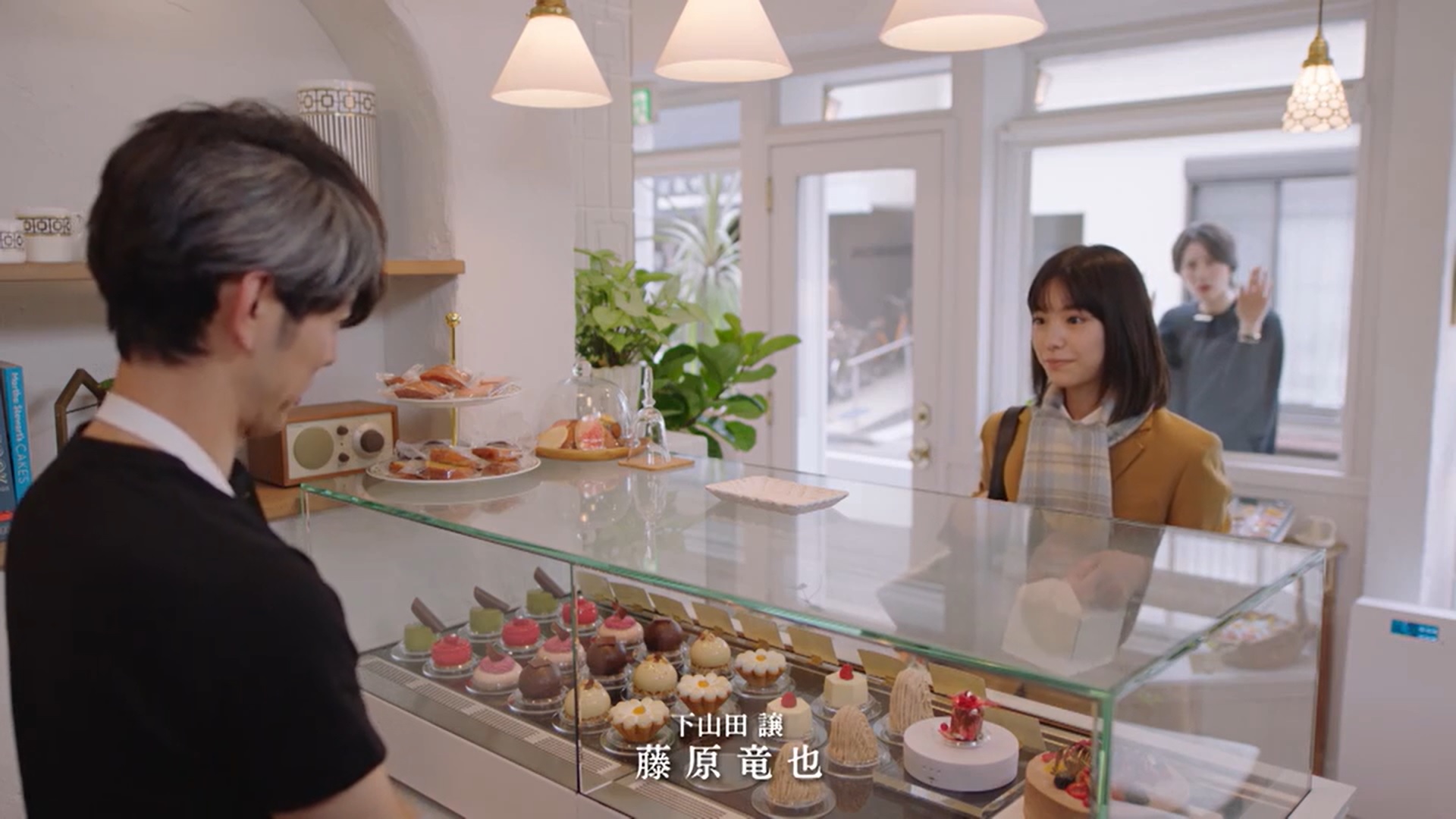
One other thing which bothers me is the cake creations designed for this drama. Surely they didn't get a famous patissier to come in and design all these beautiful cakes for nothing? Considering that they bothered to show Ace assembling the elements to form the cake and have close-up shots to introduce these cakes, I find it hard to think that all these efforts would be wasted on something which has no further meaning. However, the first and second cakes named "Molecule" and "Divine Comedy" don't seem to have anything in common while there was no cake shop scene at all in Ep 3. So what is happening now? Did they decide to suspend that cake shop subplot for now? And did I overthink the significance of these new creations and their titles when they could have meant nothing at all?

Frankly speaking, I tried to convince myself that there should be more than meets the eye and I should be a bit more patient to wait around for the big reveal. The issue is, if the filler episodes are not only boring but feel like a total waste of my time, should I still hold on to the feeble hope that this will improve? Although the next episode is hinting at a big reveal of Queen's background, I am not so hopeful about seeing anything that will change my opinion of this drama. 4 episodes is definitely more than enough time to judge whether this is to be continued or dropped for the rest of the reason so we'll see by then.

Monday, January 09, 2023

Thoughts about "Get Ready!" Ep 1 - Winter 2023


I have to admit - I am watching this primarily for Tsumabuki Satoshi and Fujiwara Tatsuya.

Otherwise, why would I want to watch another medical drama about a talented surgeon who does operations illegally? Why would I bother watching some underground group who seems to have some lofty aspirations to save people according to their own principles (a medical version of "Avalanche"?) ...although they aren't doing it for free and still charge an exorbitant sum for what they do? Why would I even spend time on watching preachy stories about what is good and evil in this world where there are no clear boundaries between black and white?

I think you get the drift now. In other words, I wasn't expecting anything about the medical nor moral parts of this story.

What I wanted to see more of was how the four characters in the group got together, their personal motivations in doing what they do and their background stories. As an introductory episode, there were more revelations than what I expected which is a good thing. Before the drama started, I got the impression that the four of them were more or less equals even though Ace i.e. Hazama (Tsumabuki) and Joker i.e. Shimoyamada (Fujiwara) clearly seemed to be the leading figures. However, it's obvious now that Hazama calls the shots and has a very strong opinion on what operations to take on even if the patients are willing to pay. Shimoyamada just can't deal with Ace's unpredictable temperament at times that he's stressed enough to go and consult an obviously fake psychic for help. 

About this part with the fortune teller/psychic, the style of the scene and the content is a close resemblance to what you would typically see in "TRICK" or "SPEC" by Tsutsumi Yukihiko who is the leading director for this drama. Much as I do like these two series, I do not really like this side distraction which stood out like a sore thumb in this episode. Maybe they wanted to show that Joker is somewhat naive outside his professional life and so stressed by Ace that he is seeking solutions from such a questionable source despite not being convinced in the first place. Still, I think such scenes hardly add value to the plot, at least not at this stage for this drama.


Joker and Queen i.e. Yoda (Matsushita Nao) owe Ace a debt of gratitude because of how he helped them when they were in the doldrums of their lives. Joker was diagnosed with a very serious illness and told that he was dying with no treatment option available for him but Ace managed to save him. Meanwhile, Queen was chased out of the industry she used to be in because of an incident so Ace's invitation to join the team probably gave her a place where she could regain her self worth, confidence and of course, money to survive. Spade's i.e. Shirase story is still not clear though but it looks like he had a slightly different kind of encounter with Ace who roped him in for the technical part of things for their operations. From what it looks like, Joker and Queen are on pretty close terms and banter like close friends unlike the frosty attitude that Ace adopts towards them. However, Queen can still poke fun at Ace from time to time so it doesn't seem that she is as fearful of Ace like Joker who desperately wants to keep his leader happy so that he will do the surgeries. Spade looks to be in awe of Ace although he also finds the latter a bit troublesome to handle.

Much as I found the background stories and group dynamics quite interesting so far, there are some aspects which might make or break the deal for viewers:


First of all, if the underground medical group has such interesting personalities to explore, the same cannot be said of the doctors at Chiyoda Medical University's affiliated hospital and the special investigation unit which is chasing after the group. The scenes featuring these two groups were pretty bland to watch in general so it remains to be seen if things will get more interesting between these 3 groups of people or the limelight will be hogged by the 4 leads until some formidable opponent comes up to catch them. 

The only thing which is worth thinking about for now for the hospital group is - was Kenmochi's (Kaga Takeshi) reluctance to save terminally ill patients due to his intentions to protect his career by not taking on unnecessary risks so that the failures won't count against him? Or is it because he has some hidden agenda for his personal interests because his refusal to save the vice prime minister really sounded like it was politically-motivated? If it's the former reason, then there's nothing special to look forward to but if it's the latter, there might be some major conspiracy swirling around waiting to be discovered.


Secondly, this is not a very typical medical drama or maybe it wasn't meant to be in the first place. One telltale sign was the disclaimer at the end of the episode which states that most of what was presented in the medical scenes are fictitious and differ from what's actually done in the real world. It could mean two things - either the medical conditions depicted do not exist or the treatment methods are fake. Most medical dramas would have this disclaimer to explain that there are different forms of an illness and varying treatment methods but to say that the medical parts of this drama are fictitious is pretty rare.

What baffles me is, how clean and illogical the surgical scenes were. Usually, it's common to see blood all over the place in such scenes but that operation room was so squeaky clean and there's hardly any blood even on Ace's gloves nor the patients' organs which seemed awfully pale. Was it the harsh lighting that caused the white-out effect then? Erm...is the lack of blood in the operating theatre even possible? I get it that Ace is supposed to be some super genius at operating but is he really that capable of dealing with all parts of the body? Wouldn't he have specialized in one particular field as part of his medical training? Or did he even go through the proper education to become a doctor? Was there a reason why he became the Jack of all trades (clearly he's skilled in everything though)? It certainly doesn't look like Joker and Spade had medical training but the two of them were looking at the surgery's live stream and commenting like some experts. Or is it because they had seen so much until they know a thing or two by now? As such, if you are looking for a proper medical drama, this may not really fit your expectations especially if you prefer a more realistic take on doctors and how they treat their patients.

Next, the significance of the title was not obvious until the end of this drama. At first, I assumed that it was just a signal call by Ace to get his people into action but it does seem that it's a signal to the AI system used in the operating theatre to start the surgery. I was already skeptical that Ace and Queen could do the surgeries themselves without other medical personnel around but it seems like tasks like anesthesia, administration of medication during the operation, monitoring of vitals and coming up with 3D images for Ace to check the patient's condition are all done by the AI so that they can focus on the operations. And that explains why Ace kept speaking English in the surgical scenes because the AI probably only understood instructions in English. The thing is, the signature line's presentation by focusing on Tsumabuki's lips as he mouthed the words does seem overly pretentious and can get on the viewers' nerves over time. And I certainly hope that the title has a deeper meaning than just being a command call to the AI system.

Last but not least, the moral aspect of the story came across as rather preachy for now. Much as I can see how Ace's group is being shown as some morally-upright team which helps people worth saving, the criteria applied is very much subjective and dependent only on Ace's assessment. When compared to Kenmochi's autocratic manner of "passing a death sentence" on those patients who he refuses to save, I don't think that Ace is necessarily more moral or kinder than Kenmochi at this stage. His judgement does come across as double-standard and not so convincing for now but there should be a proper reason to explain why later.


Guest stars typically don't get enough airtime to show their acting chops (or the lack of it sometimes) but Ikematsu Sousuke's portrayal of a money-grabbing CEO on his death bed was pretty solid and complete. There was enough build-up to show who he was back then and now before he "redeemed" himself to the extent that Ace was willing to save him. However, Ace playing the role of God/judge in this case goes against the principle of not discriminating against a patient which we would have seen being repeated countless times in many dramas. Then it begs the question, if someone was poor and couldn't afford the fees Ace is charging, what happens then?

Fujiwara also surprised me a bit this time with his portrayal of Joker. Usually, he tends to take on relatively unique roles with strong character traits but this time, Joker does seem like an ordinary chap in his real life. Nothing wrong about that and it actually made him look a lot more wholesome and warm which I think was a reflection of his near brush with death caused by his illness. 

In contrast, Tsumabuki's image this time just resembles Black Jack and it probably is no coincidence considering that he acted in another drama i.e. "Black Jack ni yoroshiku" although the appearance in the drama then was quite different from Black Jack himself in the manga. The thing is, I don't mind homages to past works and quite like them as well but that half-covered face while working as a patissier seems so out of place. All I could think of was how unhygienic it was for someone preparing food not to do something about their long hair. 

The beautiful desserts were a nice distraction though to relieve the tension.

For now, I'll probably give this drama a few more episodes before deciding whether to follow this till the end.

Sunday, January 01, 2023

Preview of "Get Ready!" - Winter 2023


Title: Get Ready!
Official website: here
Official Instagram: here
Official Twitter: here
O.A. Start Date: 8 Jan 2023
Timeslot: Sundays at 9pm
Broadcast by: TBS
Cast: Tsumabuki Satoshi, Matsushita Nao, Hyuga Wataru, Ichinose Hayate, Mitsuishi Kotono (voice), Hashimoto Manami, Touma Ami, Yuki Moe, Nakayama Masei, Tanokura Yuuta, Nagami Rea, Yajima Kenichi, Katayama Yuki, Sugawara Takuma, Yoshida Ryouya, Kawamoto Koki, Ibu Masato, Kaga Takeshi & Fujiwara Tatsuya