Showing posts with label Ashita Mama ga inai. Show all posts

Sunday, September 07, 2014

Review of "Ashita, Mama ga inai" - Winter 2014

Amid the bad press surrounding this drama when it was airing, I didn't have time to finish watching it so I was not too sure if it was really as controversial as the critics made it out to be. However, after watching the entire drama, the feeling I got was, "what was all that hoo-ha about anyway?". I'm not trying to belittle the concerns highlighted by the parties concerned about children living in and staff working in welfare facilities but honestly, this drama had nothing really drastically different from past dramas about children in less-privileged circumstances that warranted all that negative publicity. Certainly not to the extent of having the drama shortened or the sponsors pulling out their CM deals too.

Before I begin with my review, here's the usual disclaimer. If you haven't watched this drama and do not wish for me to spoil the fun for you, please skip this.

The story begins in this welfare facility called Kogamo no Ie (Little Duck's Home) which was established and is managed by Sasaki Tomonori (Mikami Hiroshi). As he's always dressed in dark colours, walks around menacingly with his walking stick and speaks harshly to the children under his charge, he is nicknamed "Maou" (Devil King) by them. The children who come to Kogamo are those who can't be with their parents for various reasons such as death, domestic violence or child abandon. Despite his cold demeanour, Sasaki always thinks of the welfare of his charges and tries to help them find suitable foster parents so that they may begin a new life. He even goes to the extent of partnering up with child welfare officer Mizusawa Kanai (Kimura Fumino) who brings the particulars of potential foster parents to Sasaki who then passes it on to the children to choose who they are interested in to be their foster parents. This is actually not allowed but apparently, Sasaki and Mizusawa believe firmly that children should have the right to choose who they want to be with rather than be selected by foster parents. Other than Sasaki, the only employee at Kogamo is a young man nicknamed Locker (Miura Shohei) who doesn't speak at all and goes about his daily chores of cleaning and cooking for the children.

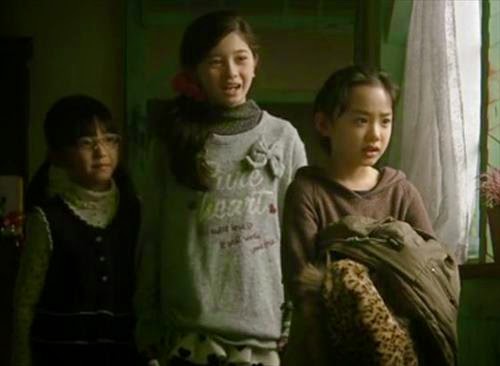
At the centre of the story are four girls who will be known by their nicknames rather than first names throughout most of this drama i.e. Post (Ashida Mana), Donki (Suzuki Rio), Piami (Sakurada Hiyori) and Bonbi (Watanabe Konomi). Their nicknames have a lot to do with their circumstances e.g. Post was nicknamed as such because she had been abandoned by her parents and left in the child post box at a hospital. Donki didn't want to accept her nickname at first because she was called as such due to her mother using a blunt object to hit her lover and was arrested by the police for assault. In Japanese, a blunt object is called donki. As for Piami, her real name is Naomi and she plays the piano well (she used to be a rich man's daughter and learned to play from young) thus she is nicknamed as such. Last but not least, Bonbi got her nickname because the people around her thought that she was admitted to the facility due to her parents being in poverty. However, the real reason was that they died due to a natural disaster and their bodies were never found but Bonbi still refused to believe that they were dead so she would rather believe that her parents would come back for her once they had money.

To put it simply, the story focuses on how the children in Kogamo gradually get adopted one by one or return to their original families for one reason or another. No matter the outcome, Sasaki would strive to achieve the best for these kids. Throughout the process, there were times when he would reprimand the kids for being too wilful or not pandering to the foster parents. Actually, he meant well although the words he used could have been more carefully selected. Then again, if he chose to go soft on the kids, they might not listen to him. I guess it also has to do with the fact that Sasaki used to be a police detective and had limited exposure to children thus he might not have been able to talk nicely to them even though he may have wanted to.

If the kids insisted on throwing tantrums and not accepting the circumstances that they were in, chances are there won't be any foster parents who might be willing to take them in. Sasaki believed firmly that securing the best match between child and foster parent was the No.1 way of ensuring that both parties would be happy. As such, he would rather take on the role of a devil to force the children to understand the circumstances they were already in and make an effort to change their destinies. We cannot deny the fact that there is already discrimination towards children in such under-privileged conditions such as name-calling or parents telling their kids not to mix around with such children i.e. automatically assuming that the children would be bad people just because they didn't have parents or a complete family. To Sasaki and perhaps to Mizusawa too, they were probably of the opinion that by sending these children off to families which can truly care for them, that was going to be the best way out.

Of course, in Sasaki's case, the reason why he set up Kogamo was partly due to the fact that he wanted to atone for his sin of killing his own child. He didn't actually mean to do that but as his wife Kaori (Suzuki Sawa) was in critical condition while pregnant, he had to give up his child in order to save her. This led to the breakdown of their marriage thus Sasaki could only watch Kaori from afar now and did not dare to meet her for fear that she would run away again. In the end, the relationship between them is revealed and Kaori goes off again as she feels guilty towards Sasaki for being with another man to seek relief for the loss of their child.

As the children go off one by one, the only people left are Otsubone (Ogo Suzuka) who is planning to leave Kogamo as she's nearing 18 and will live at a boarding school to learn nursing and of course, Post. In fact, Post has been the longest-staying child in Kogamo since she was brought back as an infant by Sasaki. Although Post had a chance of being adopted by her teacher's family, it caused a lot of emotional pain for her. Seeing this, Sasaki decides to adopt Post as his own daughter which she gladly accepts in the end. In a way, she has also accepted her past because she's now willing to use her real name i.e. Kirara rather than be called Post.

Frankly speaking, if you have not watched this drama and simply heard about the controversy surrounding it, you might have assumed that this was some dark drama about children being bullied because they had no parents and how abusive welfare facility workers can be. This is absolutely rubbish! Especially towards the end, you can see how positive the theme has become with everyone seeking their own form of happiness. No doubt it may have to do with the fact that the direction of the story changed due to the bad press. However, even from the first few episodes, I still didn't see anything that was so controversial to warrant all those negative remarks. Sasaki may have been a bit harsh towards the children by calling them names but this is way too mild compared to some of the more controversial social-themed dramas in the 90s especially those from Nojima Shinji. And the bullying is nothing new, nothing that radically different from what I've seen in many other older dramas. As for the nicknames, they are not given out of malice (definitely not name-calling) but there is a valid reason for each of these names given. Especially in Post's case, she detested her real name Kirara given by her birth parents because it was not only very girly (unlike her strong character) and that she didn't want anything given by them. That is why she was perfectly fine with being called Post although some people may view it negatively.

Talking about Nojima's role in this drama, he was merely listed as script director while the real scriptwriter was Matsuda Saya. I think there could be a certain degree of influence from Nojima but this drama is comparatively more heartwarming and positive than many of his older works such as Koukou Kyoushi, Ningen Shikaku, Miseinen, Seija no Koshin, Sekimatsu no Uta or Lipstick. It is unfair to say that just because Nojima was involved in this project that this is definitely a dark drama. If you look at Love Shuffle, you can hardly associate the current Nojima with his style in the 90s. I don't know if there was any deviation from the original storyline as compared to the final product we saw but if there had indeed been changes made to react to the negative press surrounding the drama, I think that would have been a real pity because this drama had the potential to be great, not just average as how I feel about it. Before the season started, this drama looked too promising but I think the pressure on it somehow caused the drama to fizzle out in the end.

As for the acting, Ashida Mana felt like an adult trapped in a child's body. She was way too mature for her age which speaks volumes of her acting skills but it can be a bit too uncomfortable to see her being so much like an adult. On the other hand, Suzuki Rio reminded me a lot of the old Ashida Mana who was great in acting and yet retained that child-like charm. I wouldn't say that who is better than who because their characters are very different. It would be nice to see Ashida go back to looking and behaving more like her age in her next work rather than become a half-adult who gives a rather awkward vibe. I also like Watanabe Konomi's performance as Bonbi who really could strike a balance between providing comedic relief and being all serious when the truth about her parents were revealed.

As for the adults, Mikami Hiroshi's character was fleshed out only when his link to Kaori was exposed so for the first part of the drama, you would probably see him as a stern man who cannot bring himself to be nicer to the kids under his charge. When his vulnerabilities and his sad past were revealed, it makes him look more like a complete character and I like his subtle way of acting as well as his interaction with Ashida Mana. With regard to Kimura Fumino and Miura Shohei, they were both pretty "emotionless" throughout most of the drama so it's a bit more difficult for me to warm up to their characters or find them endearing. Nonetheless, having to maintain that cool face is already a challenge and I think they did reasonably well in that sense.

And my ratings for this drama...

Story: 7 out of 10 (I liked this drama for its positiveness that you had to take the initiative to change your circumstances rather than wallow in pity but there is this nagging thought that this drama might have done better if there was no controversy surrounding it in the first place)

Acting: 8 out of 10 (Great acting from the child actors especially but not all characters were evenly developed so some of them were less memorable)

Theme song/BGM: 5 out of 10 (The theme song did not leave much of an impression on me.)

Visual effects / Scenery: 6 out 10 (There were some nice outdoor scenes like the sunset on the bridge but other than that, there wasn't a lot to impress me visually.)

Teamwork / Chemistry: 8 out of 10 (The girls had pretty good chemistry together and I also like how Ashida Mana and Mikami Hiroshi interacted with each other.)

Total: 34 out of 50

Friday, May 23, 2014

BPO decides not to launch inquiry into "Ashita Mama ga inai"

The Broadcasting Ethics and Program Improvement Organisation (BPO) decided on 23 May that it was not going to launch an inquiry into the NTV Winter 2014 drama "Ashita Mama ga inai" and commented that the broadcaster had the responsibility to be more mindful of the impact on society when producing dramas of this nature. BPO also said that although the broadcaster had the freedom to produce meaningful programmes which talk about the problems happening in modern society, they should have taken extra care at the preparation stage to prevent any possible violation against human rights. However, there was no evidence to prove that the drama had hurt the reputation of those related to children's welfare facilities as claimed by Jikei Hospital thus BPO decided against launching an inquiry.

Source: Sanspo

Saturday, March 01, 2014

NTV receives an Internet petition containing 7,000 signatures asking for the termination of "Ashita, Mama ga inai"

Just when you thought that the saga was dying down, it comes back with a new development. A couple of days ago, NTV's CEO just said that they won't issue a specific apology to the children in welfare homes because of this drama and now, there's a new move from someone.

According to the Sanspo report, a male student in the second year of senior high from Kagoshima City, sent an Internet petition containing 7,000 signatures to NTV and asked for the termination of the drama and a public apology to children in welfare homes. Apparently, the Internet petition was started on 22 January and NTV has confirmed receipt of this petition.

I'm not belittling the efforts of this student and all those who signed the petition but I'm a bit skeptical about how much of an effect this will have on the whole saga. It's already March and the winter 2014 season is coming to an end soon so would it matter if NTV ends the drama just one or two weeks before its original scheduled end date? As for the apology, once the drama ends, it's even more unlikely NTV will spend time and effort dealing with the parties who want it to apologise. That's why I feel a little bad for those who prepared this petition because it looks likely that all the efforts will be in vain.

On the other hand, I've read comments criticising NTV for making changes to the drama until it deviated too much from its initial social-problems focus. Seems like you really can't please everyone...

Source: Sanspo

Sunday, February 09, 2014

Thoughts on the neverending "Ashita, Mama ga inai" saga

Each day passes with hearing a fresh complaint or repeated grouses about this drama in the press that frankly speaking, it's getting a bit too much to bear. The previous week saw NTV explaining its stand again in an official response statement and even promising to make changes to the drama so as to pacify the protesting parties. Amid all the bad press, I came across the following article mentioning a former politician cum celebrity Tachikawa Asuka who spoke of her days in an orphanage and the harsh treatment she underwent. She was especially critical of the protesting parties and said that if they had the time to complain against the drama, they should divert their time and energy to improving the situation in welfare homes instead of denying that there are no facilities which treat the children in an abusive manner and trying to shift the attention elsewhere.

Tachikawa was raised in an all-girls orphanage located in Suginami Ward, Tokyo, and stayed there when she was 3 to 18 years old. According to the interview in Sponichi, she said that she experienced even worse treatment at the orphanage than what was described in the drama so she feels that the drama is a good starting point for people to learn about the truth behind the doors of such welfare facilities. Tachikawa mentioned that when she was a child, she didn't get to wear nice clothes like what Ashida Mana wore in the drama and everyone had their hair forcibly cut short. In addition, she was made to wear a paper sign saying "I am a idiot" pasted on her stomach and stand for everyone to see. Last but not least, she was even punished to kneel inside a paper box overnight and slapped repeatedly until she heard ringing sounds in her ears.

I wouldn't say that the protesting parties have no valid reason to complain but seriously, how much will be enough to pacify them? Apologies to everyone? Apologies to the children who were affected by the drama? Amending the drama's content? Or cancelling the entire drama even though we are halfway through the season? All this to-and-fro interactions between both sides seem to be never-ending and it looks like the controversy may jolly well die down only when the drama finishes its run next month. There have been some celebrities who spoke on this issue and giving their support to NTV but surprisingly, they have not been featured prominently in the media as compared to the protesting parties which had been holding frequent press conferences to illustrate their points. It's as if we are getting a lopsided view of the controversy where NTV was painted as the villain in the first place for seeking such ways to boost the popularity of the drama through the negative press. However, the sponsors pulling out and constant social pressure proved too much for them in the end thus resulting in NTV having to make changes now. Frankly, I am most reluctant to see NTV making changes to the drama due to the pressure especially after it tried to hold on to its stand of protecting its production. I don't know how these changes will affect the drama but if it tries to become politically-correct just to please the protesting parties, I think the drama would have become an unfortunate sacrificial lamb in the whole controversy. Aiming to become the second "Ienakiko"? If the changes really do alter the course of the drama significantly, I certainly don't think it will ever achieve its initial ambition.

Thursday, January 30, 2014

Update to the "Ashita, Mama ga inai" controversy - 30th January 2014

More news and developments in the controversy surrounding "Ashita, Mama ga inai".

- All 8 sponsors of the drama suspended their CMs as of 28 January and the change will take effect from the third episode onwards. However, it looks set that the sponsorship contracts are still in effect even though the CMs won't appear during the drama's broadcast. Most of the companies which made this decision cited reasons such as requests from customers to withdraw the CM deals and inappropriate environment or circumstances to air their CMs. The vacated CM slots were then filled up by programme trailers, CMs from other companies which are not sponsors of the drama and public service commercials from the Advertising Council Japan (commonly known as AC Japan). Despite the controversy and hoo-ha over the sponsors' reactions, Episode 3 bounced back strongly by 1.5% to hit 15%.
Source: Sanspo / Sponichi

- During the regular press conference held by NTV on 27 January, NTV's president Okubo Yoshio asked those who are protesting against the drama to watch it till the end in order to get the full picture of what they are trying to convey. As such, there are no plans to axe the drama which consists of 9 episodes.
Source: Sponichi

- The National Children's Welfare Facilities Association has filed a new complaint to NTV on 29 January after receiving new reports on the adverse effects brought about  by the drama. One girl was said to have inflicted an injury on herself after watching the drama and was treated at the hospital while another child who lives in a welfare home was teased by classmates. The Association is asking for an official written reply by NTV by 4 February.
Source: Sanspo

- Takasu Clinic bucks the trend by becoming a new sponsor of the drama. It was said that the director of the clinic, Takasu Katsuya said via Twitter on 29 January due to some unforeseen circumstances, their new CM featuring former figure-skating queen Ando Miki was not able to make it in time for the third episode's broadcast. However, he said that the CM should be aired from next week onwards.
Source: Sponichi

- NTV still doesn't lose out even if sponsors take flight? It appears as if the sponsors signed seasonal deals lasting from January to March so NTV still gets its CM income even if the CMs are not shown on TV. According to an advertising industry insider, the general market rate for a primetime CM slot is more than JPY 30m per company. Going by this calculation, NTV should have made between JPY 250m and JPY 300m per month from its 8 sponsors through this drama which then translates into a total income of JPY 750m to JPY 900m over the three-month period. In this situation where sponsors withdraw their CMs and replace it with public service ads from AC Japan, they are still liable to pay for their CM contracts.
Source: Sanspo

- Jikei Hospital refused to respond to accusations about it making use of the drama to boost awareness about itself, saying that for the sake of their operations, they thought that it was best not to comment. However, they've compiled a document stating their stand towards this drama on their website. As this document is extremely long, I will only highlight the key points made by the hospital:
Source: Sanspo

Why did they release this document? - Jikei felt that their stand was not fully explained and made clear in the limited press coverage surrounding the issue and it was best for them to express their views as clearly as possible through their official website.

Why are they protesting against this drama? - The point of focus here is not the children living in ordinary families but rather those who are living in welfare homes now and had been subjected to physical and verbal abuse previously and receiving treatment now. Jikei felt that the scenes depicting the bullying and being called names by their friends jokingly can bring back unwelcome memories for these emotionally-scarred children. Although they already had their reservations way back in December before the drama went on air, they found that the first episode was largely unchanged and there were reports of children adversely affected by the drama's OA. Although the second episode was toned down a little, the hospital took offence with the fact that children were being called discriminatory names and treated like animals in a pet shop.

What was so wrong with the first episode?  - First of all, the nicknames given to the 5 main child characters in the drama were inappropriate and could lead to teasing of those living in welfare homes by their schoolmates. For example, the nickname Post was in reference to the character being abandoned by her parents at the baby post box at Jikei Hospital while Locker was meant as a reference to the character being dumped at a coin locker. Jikei had deliberately avoided using the word "Akachan Post" when they set up the Kounotori no Yurikago service to take care of babies abandoned by their parents and felt that there was no need to use such nicknames for the children in the drama although the scriptwriter may have wanted to use them for maximum impact on the viewers.
Secondly, the words said by the director of the welfare home were harsh and hurting to the pride of the children by describing them as animals in the pet shop which should practice how to cry. Jikei feared that the children in welfare homes would be hurt by such untrue portrayals of where they are living in and that this would give people the wrong impression about welfare homes.

Since this is fiction, why be so serious about this? - Fiction can only be determined if someone is able to tell the difference between fact and fiction. For most people, dramas talking about the police, schools, hospitals can be easily classified as fiction because they have first-hand experience dealing with such entities and the people within. However, the same can't be said for welfare homes in general. In addition, it is more difficult for children to differentiate between fact and fiction.

The crew and scriptwriter should have conducted more in-depth research? - Jikei cited the example of a TBS drama shown in 2013 about the Akachan Post facility at the hospital where they had spent lots of time talking to the crew and scriptwriter about the concept and thought that the other party had fully understood it. However, it turned out that there were some conflicts between both parties at one time as they tried to sought commonground while ironing out their differences. The biggest issue was the fact that Yakushimaru Hiroko who played the matron in the drama, tracked down the mother who abandoned the baby. Jikei does not do this and feared that the fear about losing anonymity would become an issue to those who want to use the Kounotori no Yurikago facility which then puts more abandoned babies in danger. From this episode, Jikei felt that more care should have been taken in the preparation stages to ensure that the correct facts are conveyed through such drama productions.

The impact on children in welfare homes - In many welfare homes, there is an increasing number of children staying there due to reasons of domestic abuse. As such, the drama should have exercised more caution in depicting scenes of abuse in order to avoid hurting their feelings further. There have been reports of children being affected by the drama in ways such as being concerned about the views of people around them and feeling uneasy about others knowing where they live in. Most of the reports of affected children are those in primary school and Jikei hopes that the impact would not spread further.

Aren't you over-reacting by asking for the termination of the drama? - Jikei stated that they knew and understood how much effort was put into the drama but the untruths in this drama had already caused an impact to the children and it would be too late to "wait-and-see" as the story unfolds over another 9 to 10 weeks. Besides, they have no idea how the story would develop and would rather not take the risk so that explains why they are asking for the immediate cancellation of the drama. Although children in the welfare homes may form the minority, it does not mean that we should disregard their feelings and that they should be protected first.

No plans for a lawsuit now - The hospital has no plans at the moment to sue for damage to their reputation surrounding the depiction of the Kounotori no Yurikago but feels that NTV owes an apology to the staff and children in welfare homes for the adverse effects brought upon them.

Are you doing this as a publicity stunt? - For a small hospital like Jikei, there is a huge risk in what we are doing now. It would have been better for us to keep quiet rather than make demands to the TV station. Besides, the whole episode makes Jikei appear as an aggressive party which is negative to our image. Last but not least, the Kounotori no Yurikago facility is a huge financial burden on the hospital so we would have been better off if we did not raise this issue. However, for the sake of babies in our care and those children who have to overcome their traumatic past to live on, Jikei feels the need to stand up for them.

What do you hope for from now on? - On 16 Jan (the day following the first OA), Jikei was informed by the media that the drama will consist of 10 episodes and two days later, informed that filming had already been completed up to episode 7. Fearing the worst impact on the children, Jikei decided to take action by asking for the cancellation of the drama. However, NTV stated on 27 Jan that they will continue with the drama which consists of 9 episodes and that filming was done up to Episode 4 and the script was written up to Episode 5. This leaves Jikei with no choice but to observe how things go from now on but they still hope that NTV will take the necessary precautions to adjust the content and avoid causing more emotional pain for the children. However, they hope that as the drama highlights the negative aspects and problems faced by those in welfare homes and children being raised by foster parents, it will help society as a whole to understand the situation better and improve it in time.

Saturday, January 25, 2014

The controversy continues for "Ashita, Mama ga inai"

It doesn't look like the controversy will die down anytime soon as Jiei Hospital shows that they mean business when they said they want NTV to stop the drama "Ashita, Mama ga inai":

- The second episode of the drama dropped slightly by 0.5% to 13.5% which is considered quite good because most dramas tend to lose more than a few percentage points in the second broadcast compared to its debut. Perhaps the saga surrounding the drama made some people tune in to see what kind of a drama this is? Some people could also have stopped watching the drama if they found it too painful to sit through. Episode 2 featured the development of someone getting sent to a potential foster parent family for a trial stay and those who have to remain behind have to grapple with the emotions running through them as they see this. (Source: Sanspo)

- The National Children's Welfare Facilities Association held a press conference on 21 January, asking NTV not to hurt the children and staff in welfare homes further with its drama and called upon it to improve and be more aware of the sensitivity of the situation. It was revealed that the association received reports of children living in welfare facilities being teased in school and concerned parents calling to ask about the condition of such facilities. They even questioned what NTV is going to do if any of those affected are to commit suicide over the unnecessary attention towards them. The association's president stressed that it is already very tough for the staff and children to cope with the daily challenges and the drama has made the situation worse for them by portraying untruths such as staff members insulting the children verbally.
It was also revealed that the Association already had concerns about this drama back in December 2013 when the trailer was shown on TV. They had asked NTV for the script of the first episode and was in discussions with them to ask for improvements to the content. However, after seeing the first broadcast, they realised that none of the suggestions were taken into account. As such, the Association also rejected the request by NTV to write articles about the true situation in welfare facilities which were to be published on the drama's official website.
In response, NTV's PR department said that they have no intention of disrespecting the children and staff in welfare facilities and has taken into account all the comments and criticism of late which will remind them to exercise greater caution in handling this drama. (Source: Sponichi)

- Meanwhile, sponsors seem to be wary of being drawn into this saga with no sponsor credits shown after the opening clip in episode 2.  Three of the sponsors i.e. Ebara Foods, JX Nippon Oil & Energy Co, and Kewpie have adopted a wait-and-see attitude by suspending their CMs for the time being. As for the remaining 5 sponsors including Kao and Nisshin, the CMs still ran during the commercial breaks of episode 2 but their names were not featured in the sponsor credits section. (Source: Sanspo)

- Jiei Hospital has made good of its promise to complain to the Broadcasting Ethics & Program Improvement Organization (BPO) on 22 January and asked for a quick assessment of the drama so as to limit the adverse effects on the children living in welfare homes. As they had received reports that there were some kids who were bullied after the first broadcast, the hospital decided that this was a serious matter that required immediate attention. (Source: Sponichi)

So where do things go from now? Some possible scenarios could be:

1) The social backlash gets so great that NTV has to stop the drama or end it earlier than it should be.
2) NTV presses on despite the controversy and finishes the drama on schedule with no changes.
3) NTV continues on but makes changes to appease those who are protesting against the drama's content.

I don't know if the BPO or if there's any authority which can really force NTV to stop an ongoing drama but even if the BPO speaks out against the drama or NTV, there is a likelihood that there will be social pressure which may or may not have a material effect on the outcome of this situation. Frankly speaking, too much is at stake here for NTV. If they bow to the pressure, it will dampen the spirits of the production crew and all those who are just doing their job to produce a great drama. NTV even told the Association that they aim to make this drama as good as "Ienakiko" which also talks about social bias, bullying and the plight of children in dysfunctional families. Given the controversial nature of the material, I don't think they are going into this blindly as what everyone else is claiming. Maybe there were some parts which were overly dramatised and not reflective of the true situation but what do you expect since this is a drama and not a documentary? Moreover, it will be a huge loss of face for NTV if they succumb too readily. Last but not least, if all controversial programmes are to be whacked and cancelled like this, what does this bode for the future of TV programming? That's why I think there is no easy way out for NTV than to press on and show the world what exactly are they trying to convey by the end of the season. It may or may not shut the critics up but at least, it's fairer to judge them only when the entire drama is over, not when the first episode was just shown.

I don't remember any drama being made to end earlier (other than for low ratings or problems with cast members) or had its broadcast suspended or postponed as a result of such social pressure other than once when a drama SP had to be postponed because a case similar to what was depicted in the SP happened days before the OA. If this drama really ends up being cancelled, I think this would be the first instance within the last 10-odd years.

Of course, from the viewpoints of those concerned about the children and staff in welfare facilities, they have a reason to be concerned. However, the bullying and taunts cited can't be exactly new and caused solely by this drama. In many past dramas, there were lots of descriptions about the discrimination and bias shown towards such children and how people view them differently because they don't belong to the "majority" who have complete families. So how can the blame be borne by just one drama when it's a social problem that people have been aware all along? I agree that the problem might have popped up once in a while and gone quiet for most of the time and that the appearance of this drama is just bringing a lot of unwanted attention to these kids again. However, if you are to view it from another perspective, isn't the drama also a good way of making the general public more aware of the problems faced by these children? Pretending that the issue isn't there and sweeping it under the carpet certainly isn't the way to go. Sometimes, the reality hurts so much that people must look at the truth in the eye and learn how to move on from there. And I certainly don't think the staff at the welfare home depicted in the drama are "evil" for no reason and the drama should be able to give us a sufficient reason why they had to treat the kids like that. Dramatisation may have been a bit overboard at the initial stages but I'm sure nobody has the intention of painting the welfare home staff as baddies.

This issue makes me wonder though: WOWOW has its fair share of controversial dramas especially in recent years but people don't seem to react so strongly against them. Could it be that WOWOW is paid-TV so people who don't want to watch their programming have an easy way of showing their preferences by not paying for their services? Conversely, if this controversy were to happen to a NHK drama, would it bow to social pressure more quickly than NTV which is a private network but more readily accessible than WOWOW? Some food for thought here...

Sunday, January 19, 2014

Jiei Hospital asks for the termination of NTV Winter 2014 drama "Ashita Mama ga inai"

Jiei Hospital which is located in Kumamoto City and hosts the nation's only baby post box which takes in children abandoned by their parents on an anonymous basis, raised its objections regarding NTV's Winter 2014 drama "Ashita Mama ga inai" for its incorrect and prejudiced portrayal of the children and staff in children's welfare facilities and has asked for the termination of the drama as of 16 January. The hospital is also planning to file a motion against the drama with the Broadcasting Ethics & Program Improvement Organization (BPO).

The drama which began its run on 15 January, talks about the plight of the children living in a welfare home as they are unable to live with their mothers for a variety of reasons. The hospital took offense with the fact that the key character played by Ashida Mana had the nickname "Post" which was in reference to the fact that she was dumped at the baby post box by her mother. It said that this was an added insult and blow to the children in welfare homes and that the emotional torture by the staff towards the children and invasion of human rights in the drama was definitely not the case in reality.

In response, NTV commented that the purpose of the drama is mainly to show the strength and innocence in the children as they cope with the tough circumstances and how they see love from their viewpoints. As such, there will be developments in the drama showing how people love these children. In view of this, NTV said that the broadcast of the drama will proceed as planned and hoped that the hospital will view the entire drama in order to understand the message it is trying to convey rather than jump to conclusions based on the first episode only.

Source: Sponichi

Comments: Actually, this isn't the first time NTV had complaints about its dramas. As far as I can remember, "Joou no Kyoshitsu" also had the same problem initially because Amami Yuki's character was a total devil towards the kids. "14-sai no Haha" also suffered some backlash because of its controversial theme. Whenever NTV does something which is socially-controversial, I think it's inevitable that people will react in vastly different ways. However, asking for the drama to be cancelled may be too much of a knee-jerk reaction since NTV just showed one episode. I understand where the hospital is coming from and its concerns but ultimately, this is a dramatic expression of a social issue. Of course, the majority of the people working in the industry are kind and don't treat children like how they do in the drama but I don't think people will discriminate against the staff just because of this drama. Like what NTV says, perhaps watching till the end will give a more well-rounded perspective of why they want to produce this drama and what kind of message it is trying to convey at the end.

Tuesday, January 07, 2014

Preview of "Ashita, Mama ga inai" - Winter 2014

Title: Ashita, Mama ga inai
Official website: here
Official Twitter page: here
O.A. Start Date: 15 January 2013
Timeslot: Wednesdays 10pm
Broadcast by: NTV
Cast: Ashida Mana, Suzuki Rio, Miura Shohei, Kimura Fumino, Shirota Yu, Suzuki Sawa, Mikami Hiroshi, Sakurada Hiyori, Watanabe Konomi, Nishimura Kazuhiko, Sakurada Atsuko, Sakai Miki

Friday, December 27, 2013

Mikami Hiroshi to play the sadistic director of a children welfare home in "Ashita, Mama ga inai"

Mikami Hiroshi will be taking on the key role of the sadistic director of a children welfare home in the upcoming NTV Winter 2014 drama "Ashita, Mama ga inai" which begins its run from 15 January 2014 and features child actor Ashida Mana as its lead. This is Mikami's first appearance in a private network since four years ago and he plays the role of Sasaki Tomonori, who is the director of "Kogamo no Ie" which takes in children who cannot stay with their mothers for reasons like sickness or economic hardship. Sasaki always wears a black coat and drags his feet while using a walking stick and would always use harsh words on the children staying in the welfare home. As such, he is nicknamed "Demon King" by the children but nobody really knows about the pain and troubles Sasaki hides underneath this facade. When asked about his impression of his young co-stars like Ashida and Suzuki Rio, he said that he was impressed by their ability to understand what they were doing and really thinks that they are able to act with their hearts which is quite unthinkable considering that they are only primary school students.

Source: Yomiuri Hochi

Saturday, December 07, 2013

Ashida Mana to star in her first leading role in NTV Winter 2014 drama "Ashita, Mama ga inai"

Ashida Mana will be taking on her first leading role alone in the NTV Winter 2014 drama "Ashita, Mama ga inai" (Mother is not around tomorrow) which begins its run in January 2014 in the Wednesdays 10pm timeslot. Co-stars include Miura Shohei, Kimura Fumino, Shirota Yu and Suzuki Sawa.

The story features Ashida as one of the children raised in the welfare home "Kogamo no Ie" because they had to leave their parents for one reason or another and shows how these children struggle to cope with the situation. Ashida plays the role of Post who has been in the welfare home for some time and is looked upon as a leader by the other children. Miura plays the role of an employee in the welfare home who doesn't speak a single word and is nicknamed Locker by the kids who trust him enough to share their secrets and thoughts with him. Kimura plays the role of Mizusawa Kanai, an employee in the welfare home who tries her best to find foster parents for the children and is not afraid of breaking rules to do so. However, her insistence in doing so has a lot to do with her mysterious background. Shirota plays Tojo Yuki, a man admired by the children for his good looks and kind mannerisms and they look to him as the perfect foster parent. However, the brooding sadness in his eyes suggest that there is more than meets the eye. As for Suzuki, she will play the role of a woman who works at the bento shop frequented by Sasaki, the principal of the welfare home. Her name will be kept a secret at least in the beginning of the story before her connection to the welfare home and why she knows what is going on inside there are revealed. The role of Sasaki has yet to be filled.

Source: Sponichi